Education and Learning

Japanese calligraphy, or shodo (literally, “the way of writing”), is much more than a simple writing exercise. It is an ancestral art form, born more than 3,000 years ago, that combines technique and spirituality, and has become one of the most important traditions in Asian culture. Thinking of giving it a try? Let’s explore the origins of Japanese calligraphy and how to learn Japanese calligraphy. Here is everything you need to know.
Let’s start with a little history. Japanese calligraphy has its roots in China, where the art of writing developed as early as the 3rd century BCE. It was introduced to Japan in the 6th century by Buddhist monks and gradually evolved over the centuries, developing unique styles that reflect the Japanese Zen spirit.
The first Japanese calligraphers learned to master Chinese characters, or kanji , before developing their own writing systems, such as the hiragana and katakana syllabaries. This fusion gave rise to a distinctly Japanese aesthetic that values both the precision of each stroke and the emotion conveyed through the movement of the brush.
Until the 10th century, calligraphy was reserved for the Japanese aristocracy, but it later spread to merchants and became part of settings such as the tea ceremony. It was also practiced by geishas alongside their traditional dances. More than a form of writing, calligraphy is a way to discipline both body and mind. In fact, Buddhist monks often compare it to a form of meditation.
Practicing shodo requires specific Japanese calligraphy tools, a methodical approach, and a calm, focused state of mind. To begin, we recommend using these four traditional tools, also known as the “four treasures of the scholar”:
These Japanese calligraphy tools form the core kit for beginners and help you build confidence with each stroke.
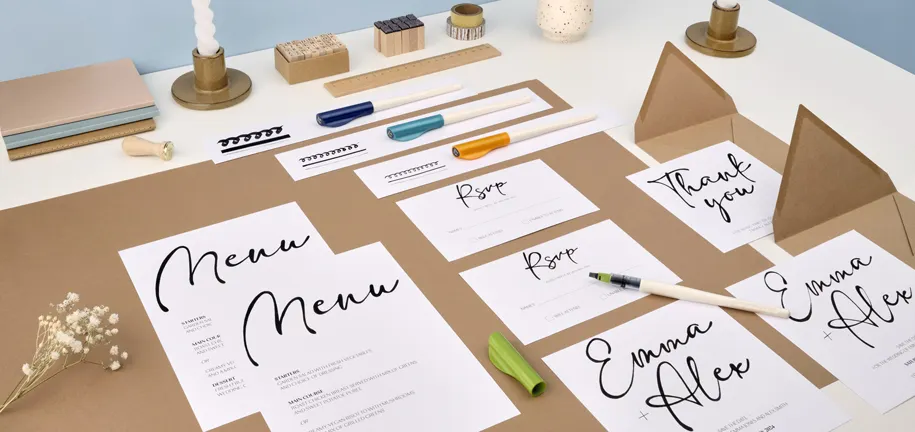
In addition to these four tools, a paperweight and a desk pad can also be very helpful. If you do not have a brush at hand, you can also practice with a fountain pen. Discover Pilot tools suited to Japanese calligraphy, such as the Parallel Pen, a fountain pen designed for calligraphy.
Available with nibs in different widths, ranging from 1.5 mm for ultra-fine strokes to 6 mm for extra-wide lines, this fountain pen makes it easy to create thick and thin strokes. Renowned around the world, iroshizuku inks by Pilot are inspired by ancestral Japanese artistry. They capture the poetry of Japan’s landscapes in 24 sublime shades, allowing you to match your writing to your mood. A great way to make calligraphy more accessible to everyone.
Once you have your tools, it is time to begin. Practicing Japanese calligraphy starts with a moment of recentering. Inspired by Zen philosophy, every stroke should be made with calm and concentration.
Begin by preparing your sumi ink, gently rubbing the solid ink on the suzuri , then dip your brush into the ink, being careful not to overload it. On paper, practice drawing the strokes of kanji, respecting their order and proportions. Balancing technique and personal expression, each brush movement is said to reflect the calligrapher’s state of mind.
Japanese calligraphy includes five main styles: tensho, reisho, sosho, gyosho, and kaisho , all of which originated in China. These writing styles are closely linked to the tools used in their time. For beginners, kaisho is generally the recommended style.
Blending tradition and modernity, Japanese calligraphy remains a living art that is accessible to everyone. Modern tools, such as brush pens, drawing markers, and liquid inks, allow both beginners and experienced practitioners to express themselves creatively while respecting tradition.
So, are you ready to draw your first strokes? Discover the Pilot range specially designed for calligraphy. Whether you are a beginner or more experienced, there are many ways to learn this art, through classes, books, tutorials, and more. Let your imagination flow and find your inspiration.